
If there’s one thing I absolutely love about summer and local celebrations, it’s photographing fireworks. There’s just something about them that brings me great joy. And as we celebrate our nation’s 250th anniversary, there should be a ton of opportunities to get out there and create some stunning images of your own.
Finding a way to capture them more creatively is a fun challenge-adding to the challenge that capturing fireworks already can be.
As I’m gathering up my gear to head down to our local minor league ballpark to photograph tonight’s post game fireworks show, I thought I would share a few tips with you to help you get some great images of your own.

First- Scout your location ahead of time
- Know ahead of time where the fireworks will be set off from, then find a safe location to photograph with an unobstructed view. Look for street lights or anything else that might interfere-including power lines, trees, etc.
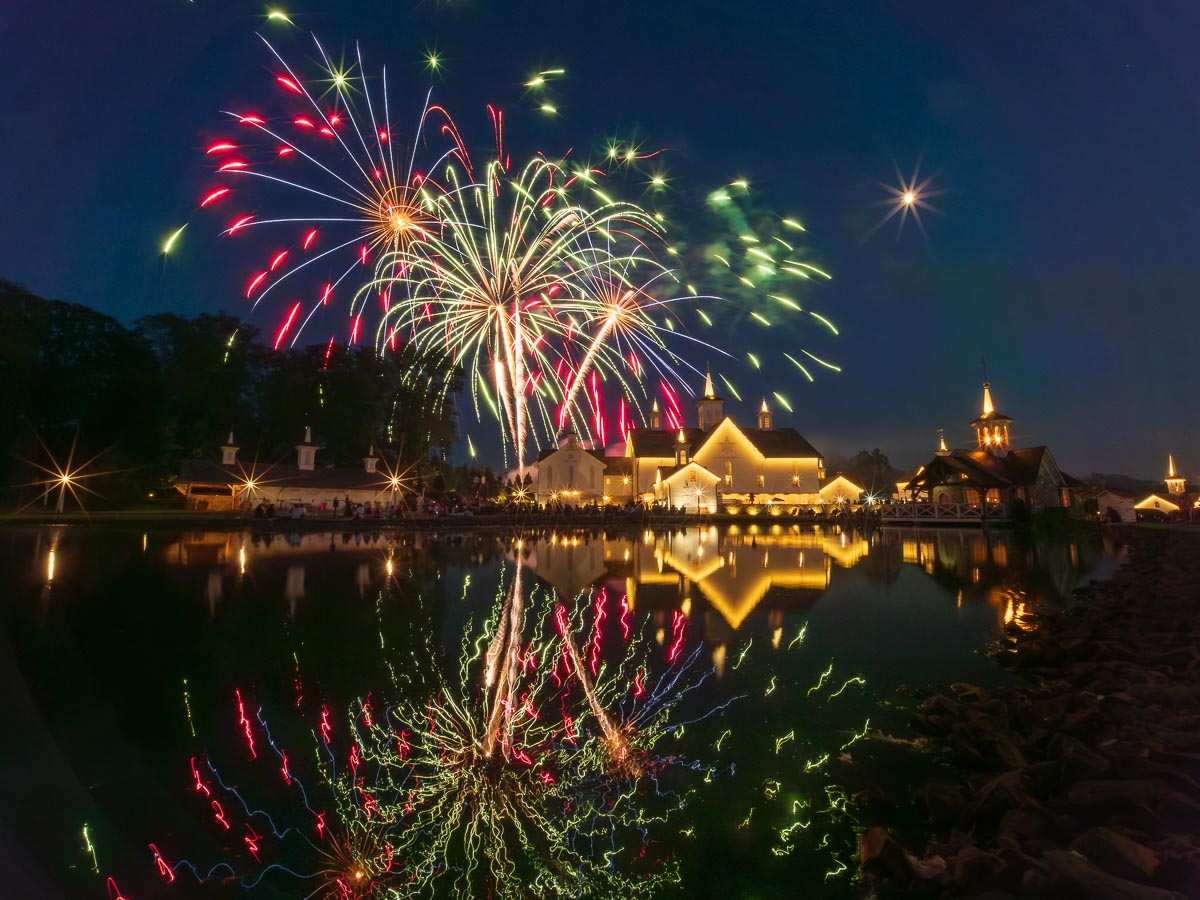
- Also try to find an interesting foreground-like amusement rides, lit fountains, buildings, bridges or a city skyline. This makes for much more interesting images. Below are a few of my favorites.
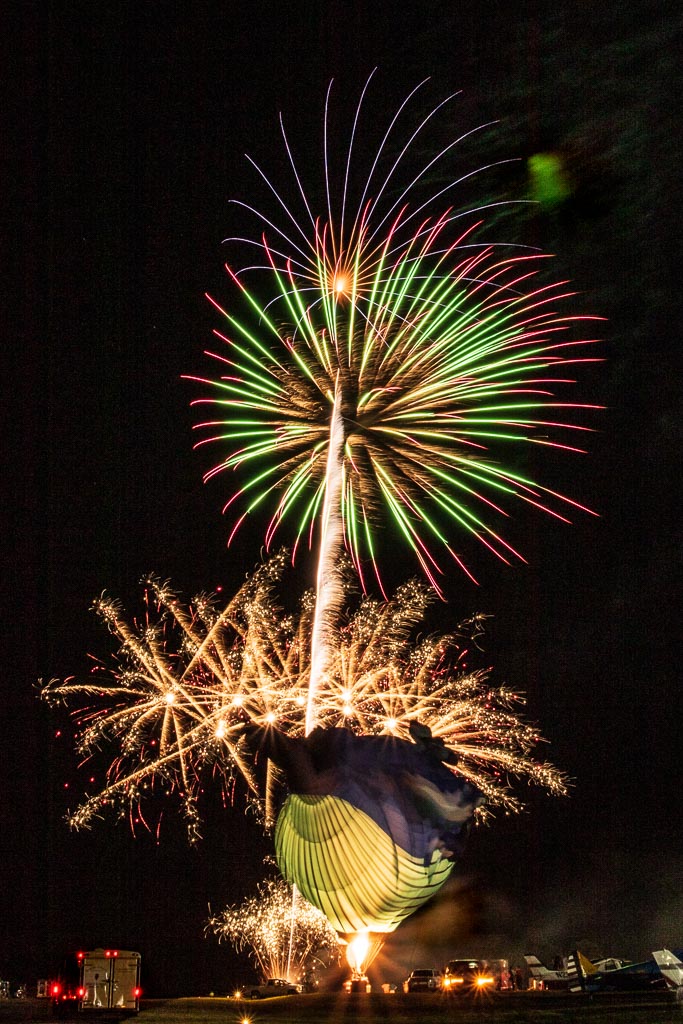
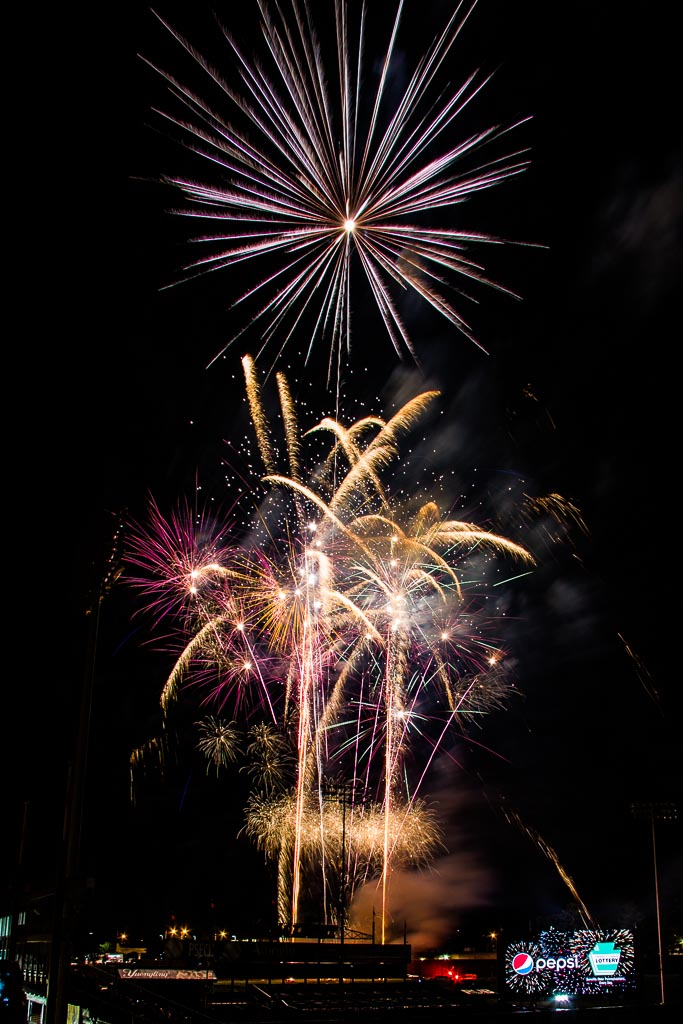
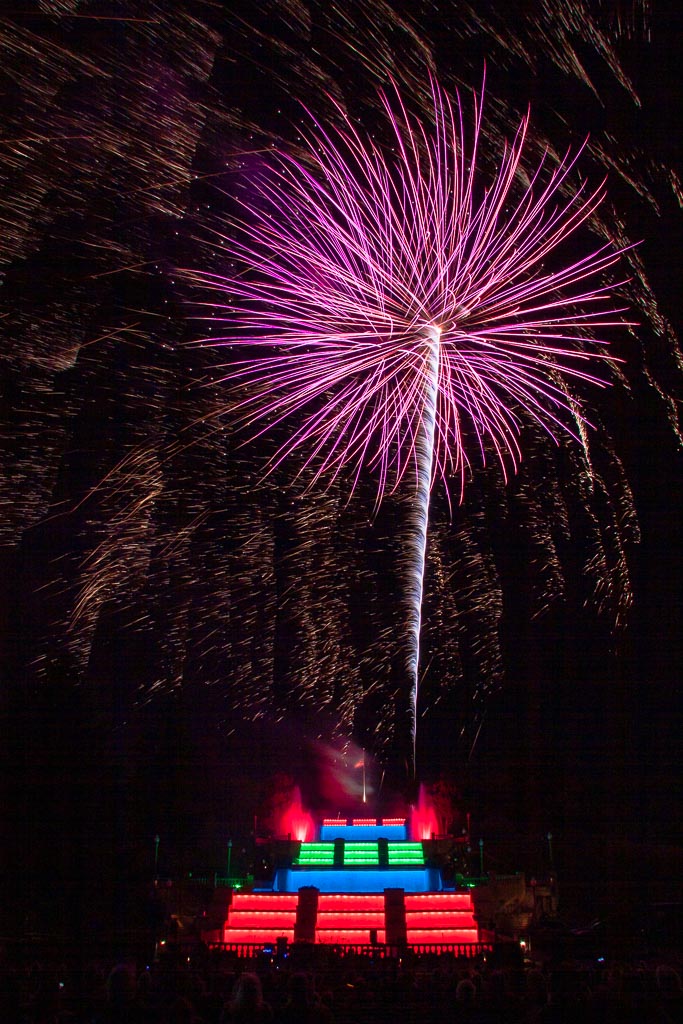
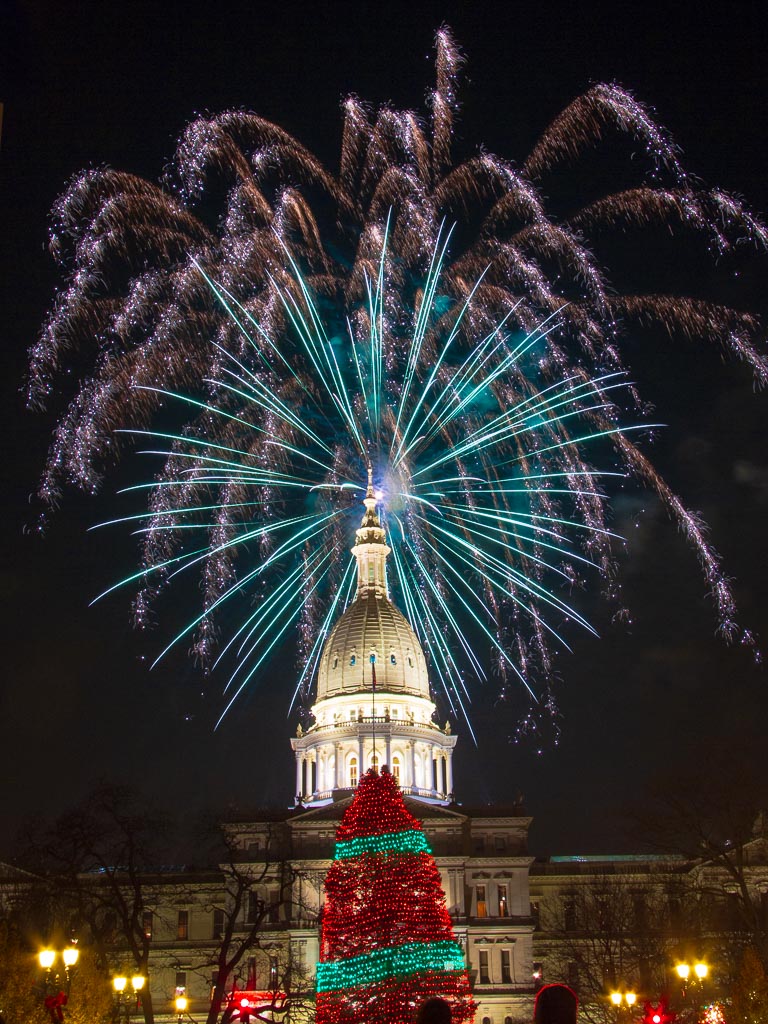
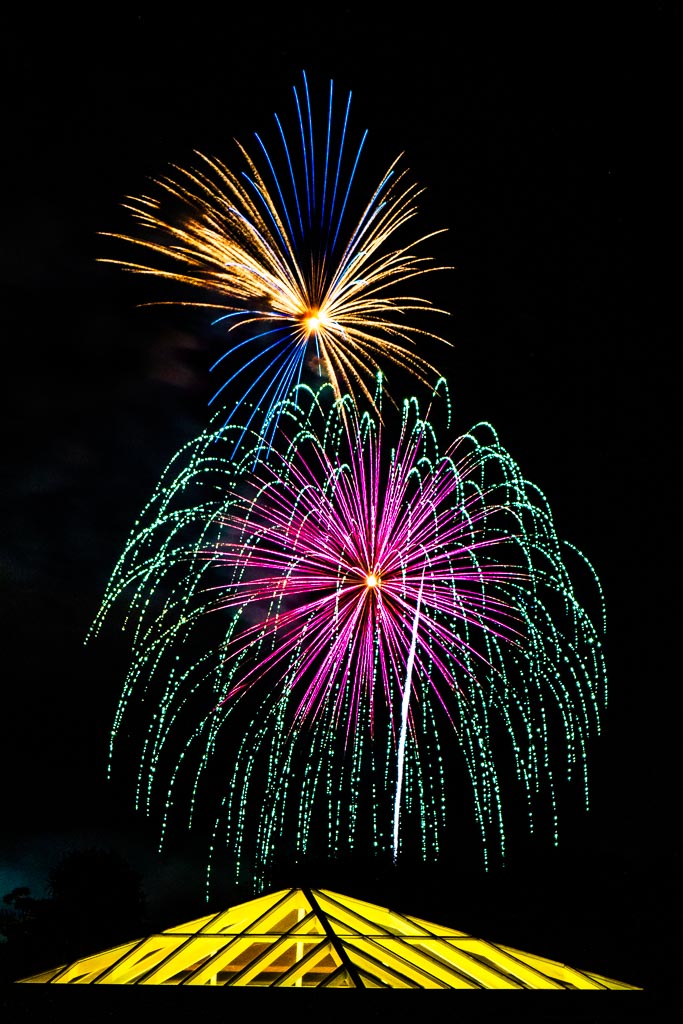
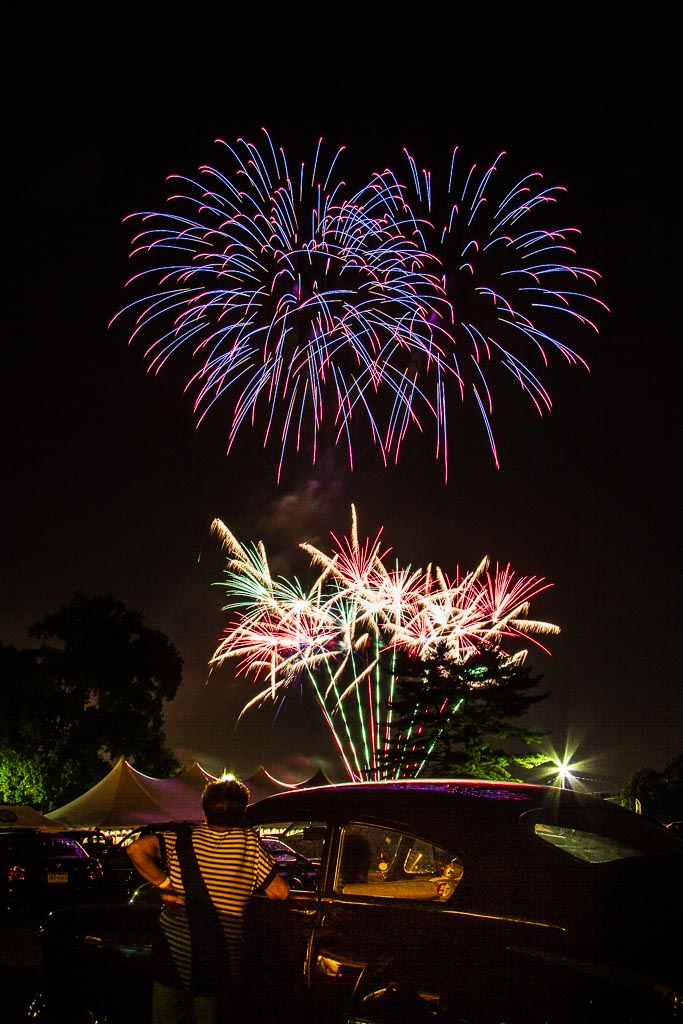
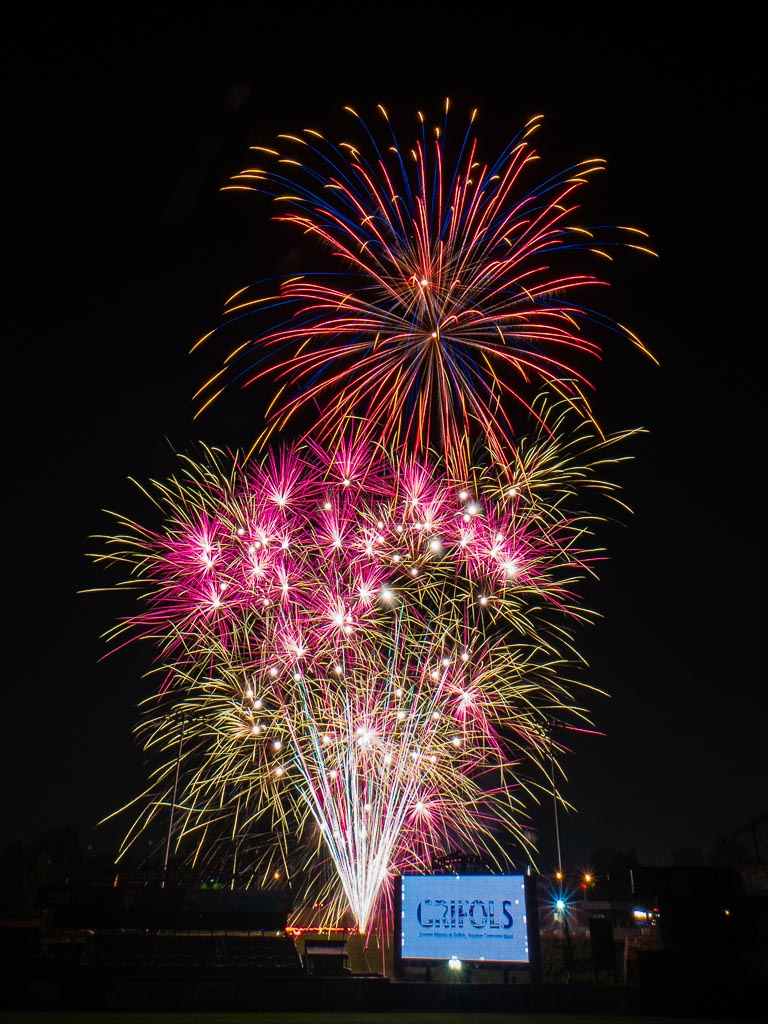

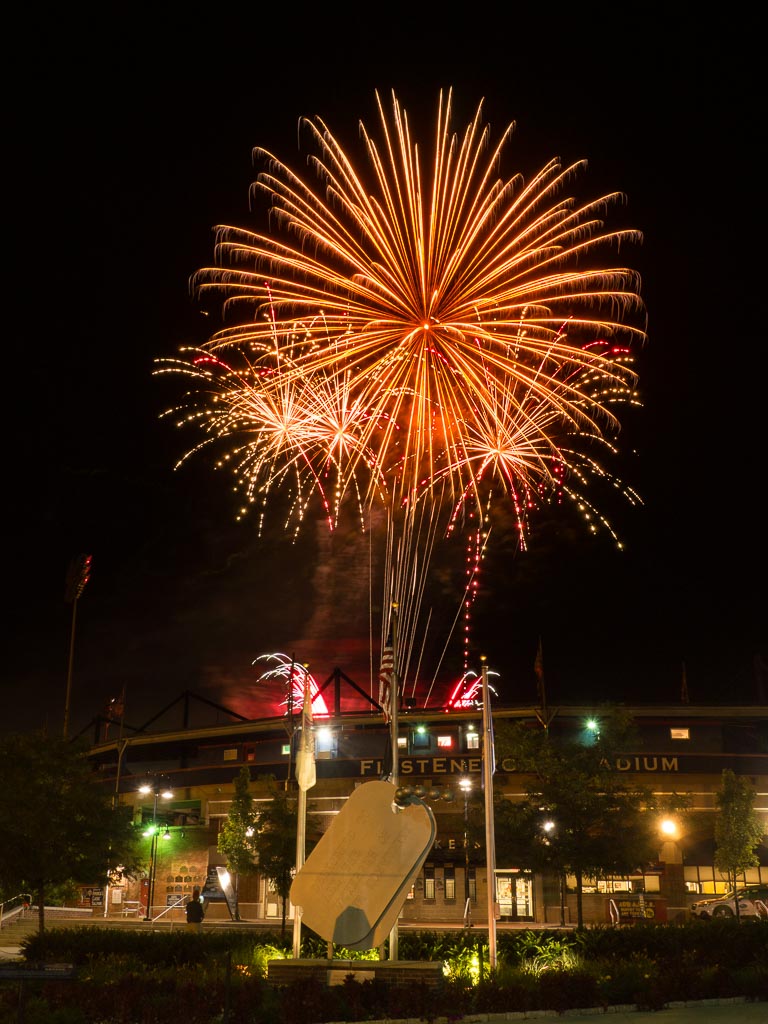
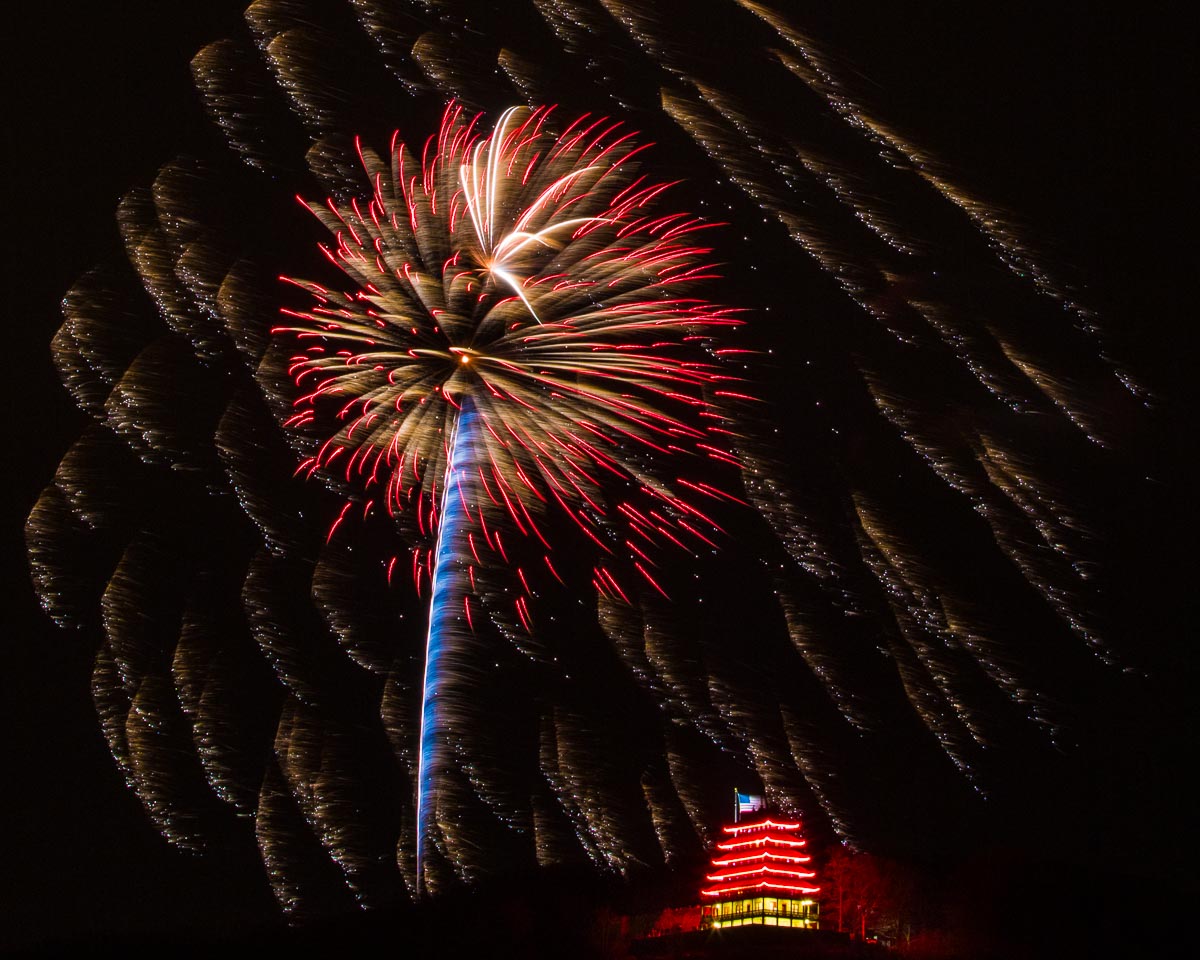
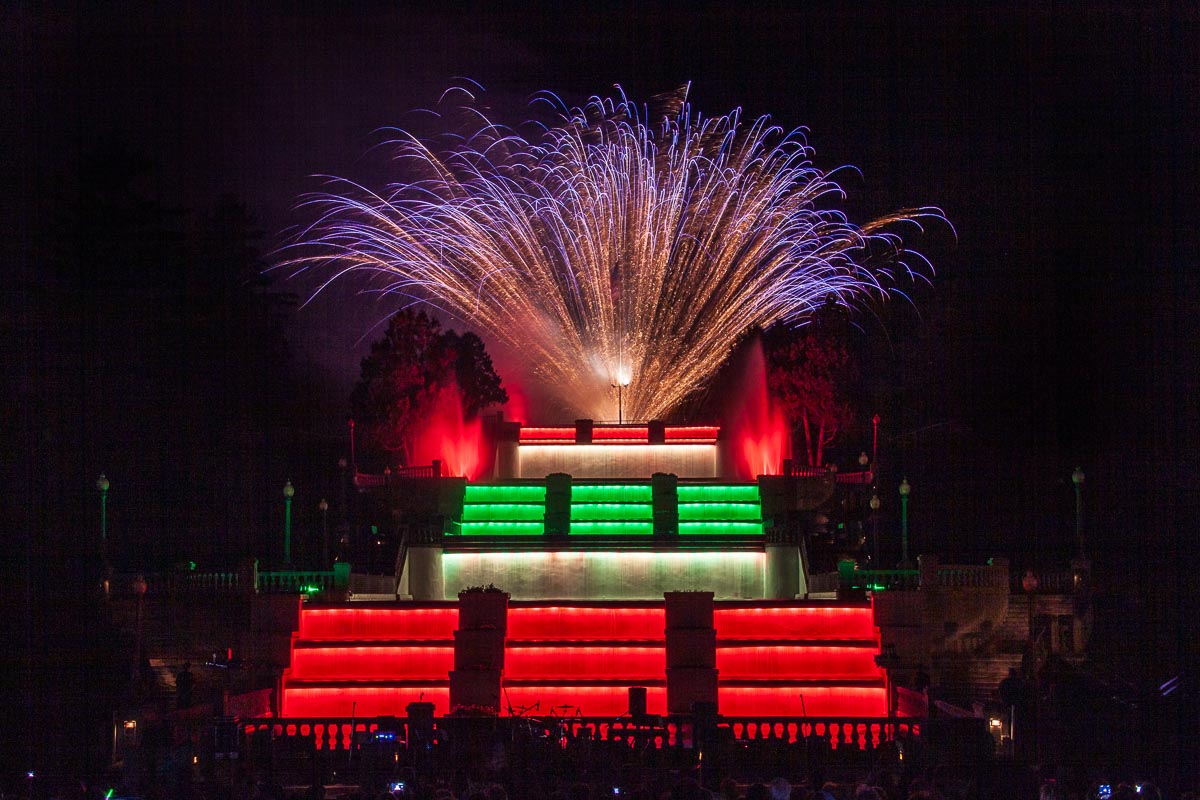
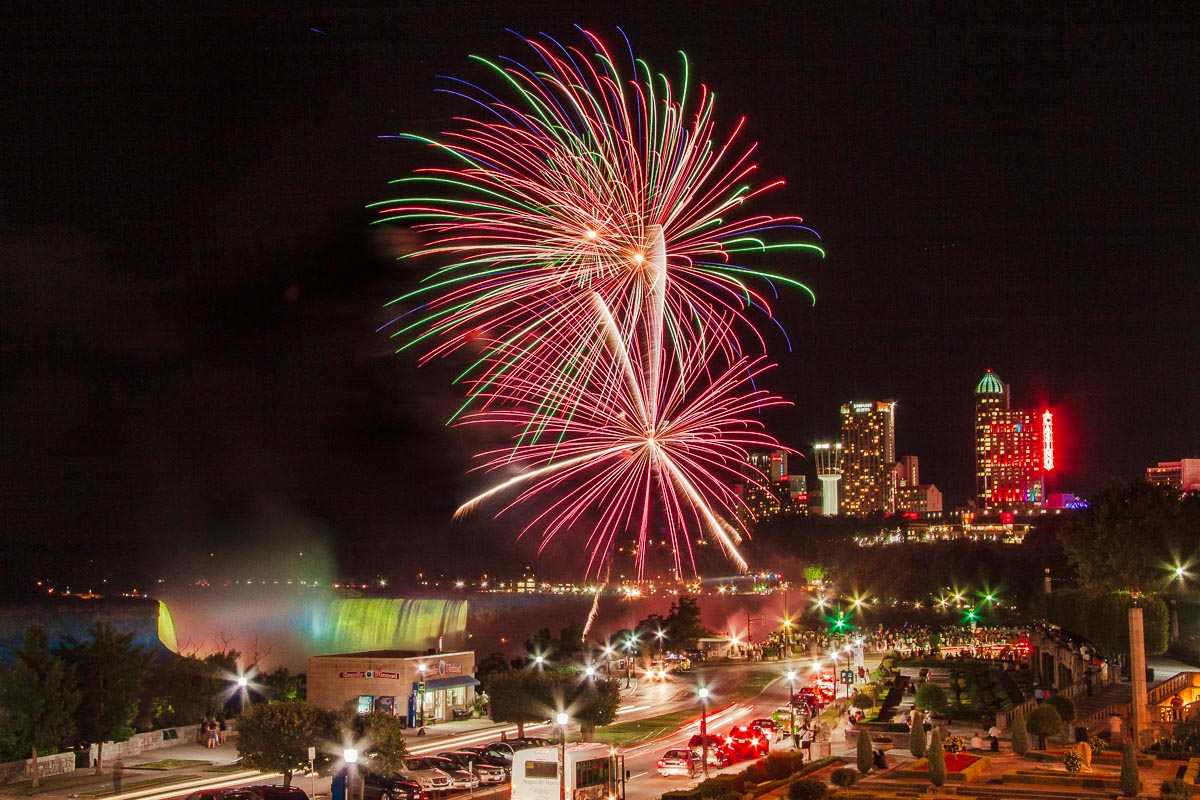
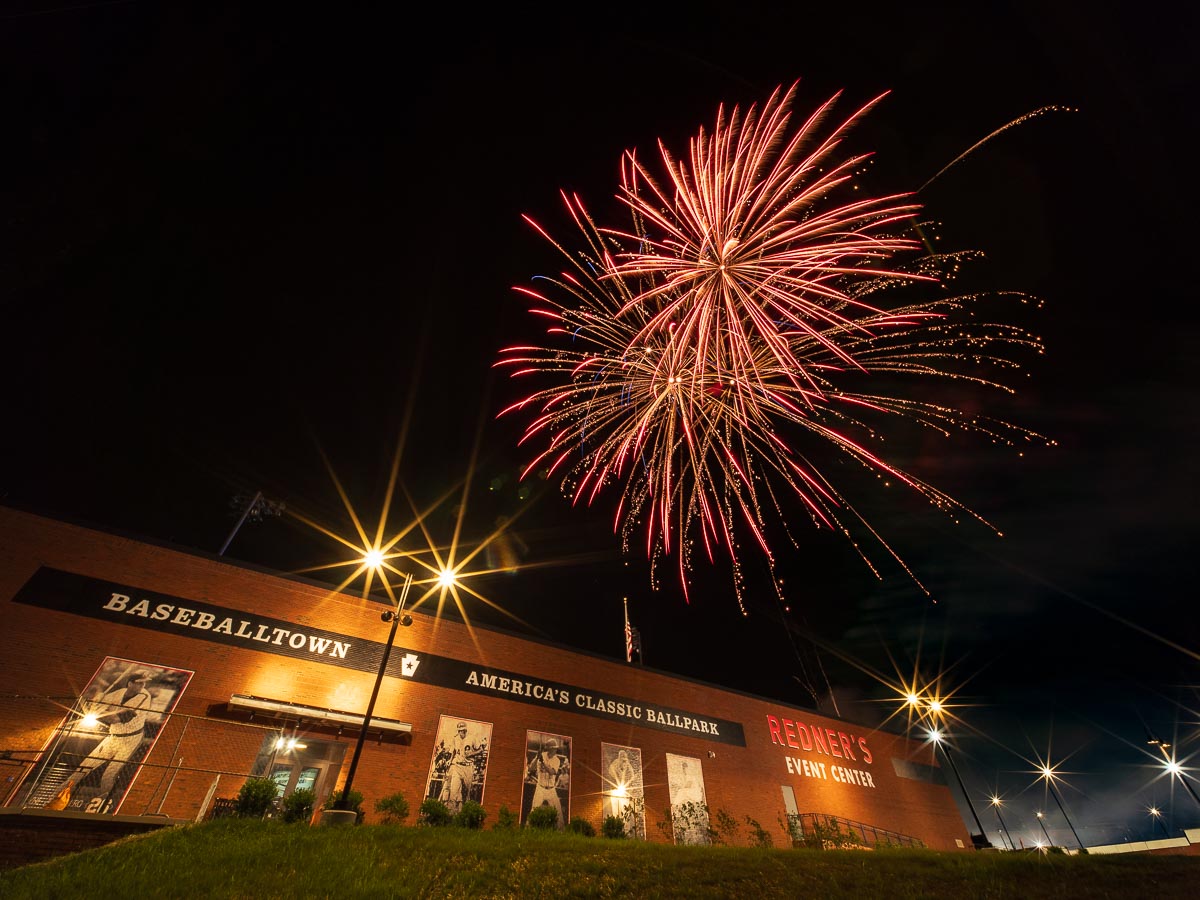

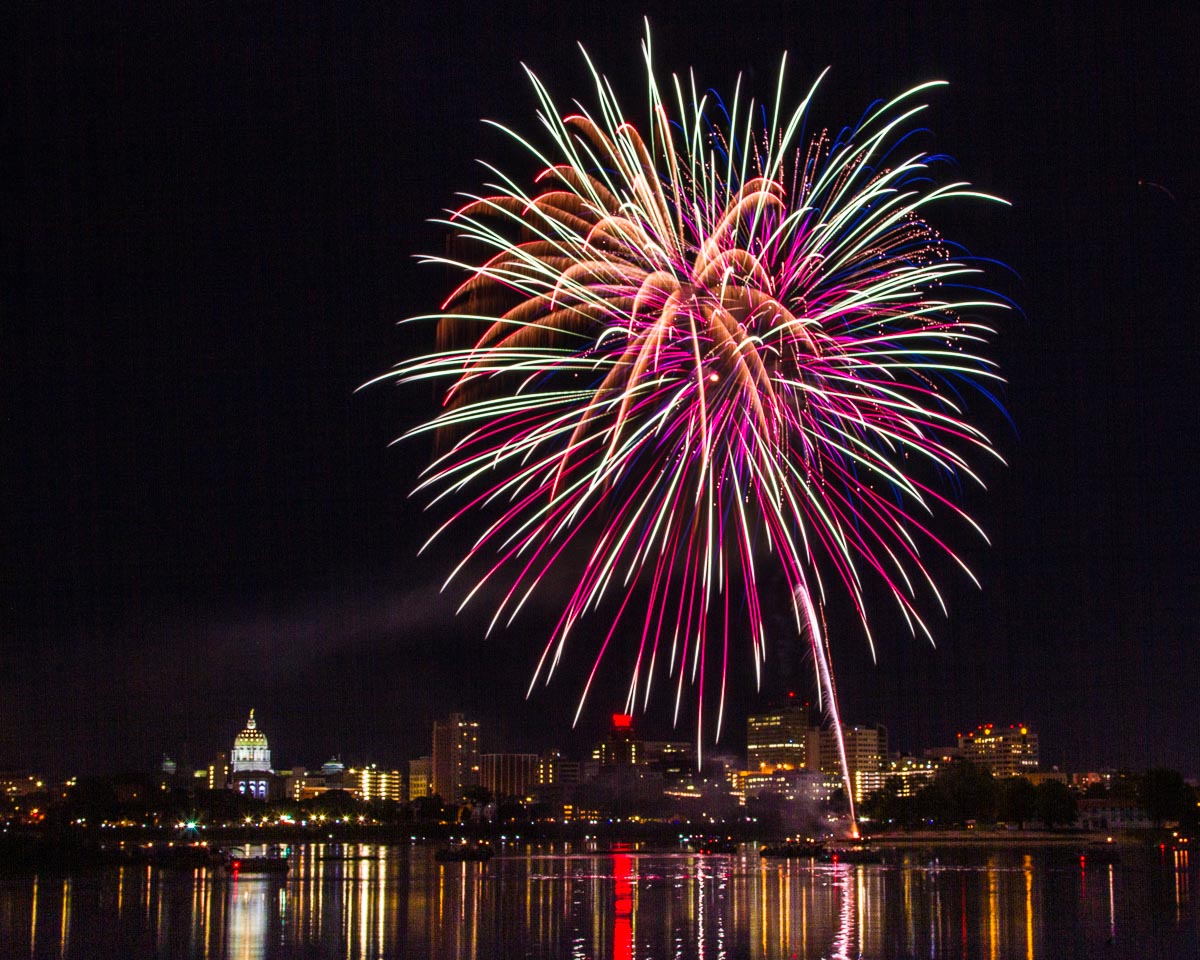
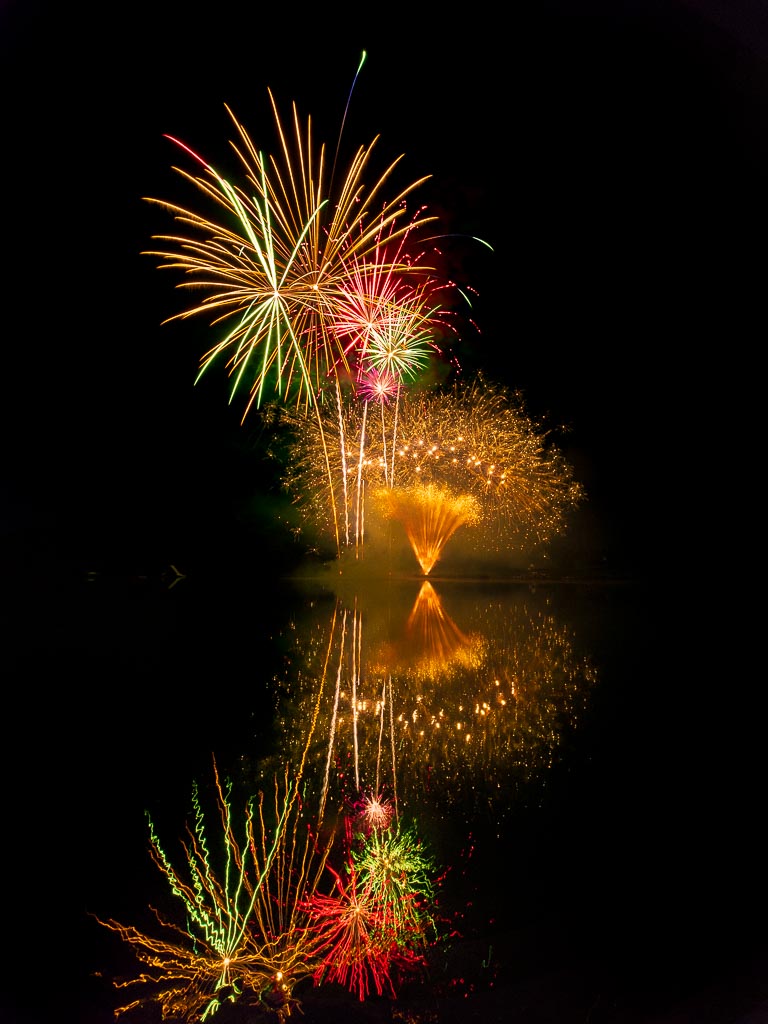
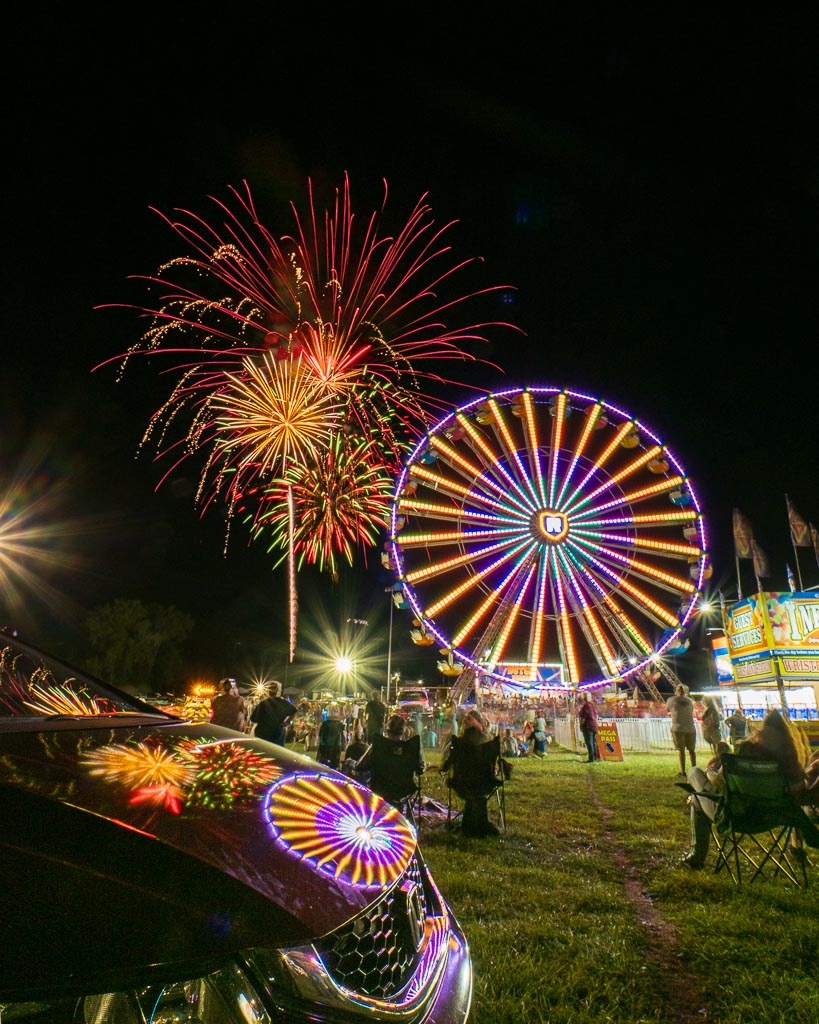
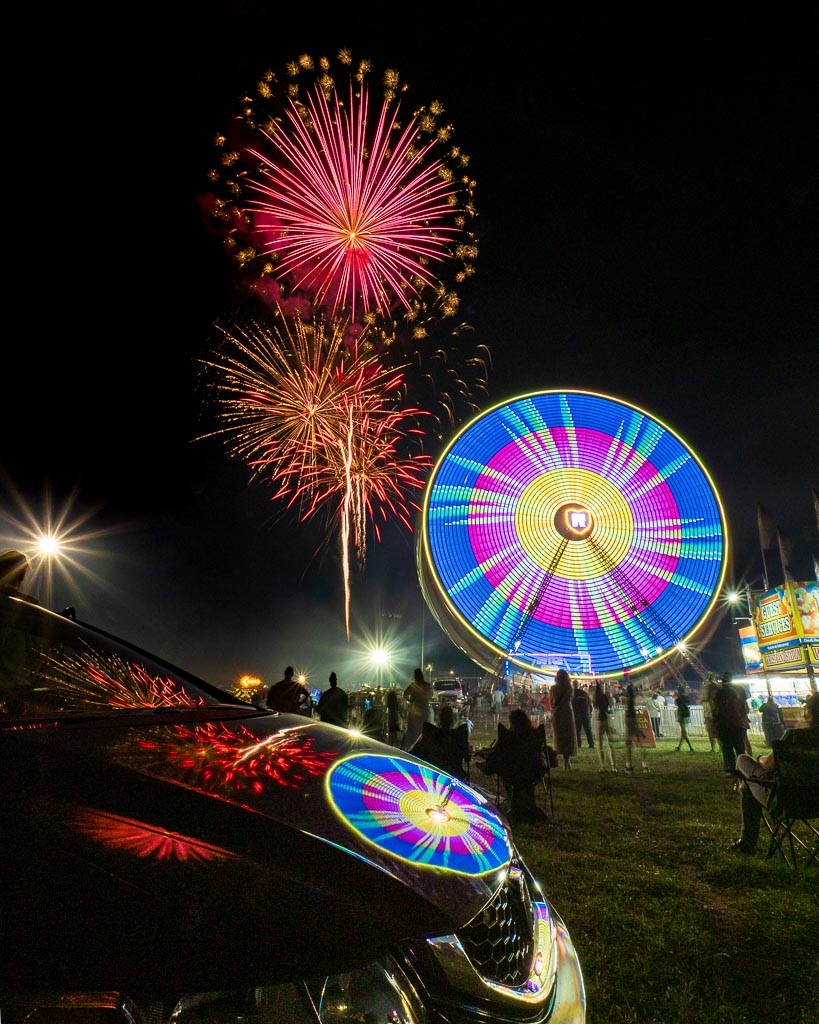
One of my favorite types of foreground is using something that will give you reflections-like water, or the hood of a car. Finding the car reflections was a wonderful accident. I had set up in a grassy parking area, assuming that no one would be leaving before the fireworks were over; but, cars started heading out, forcing me to find a different perspective. I was thrilled when I jumped between these cars and saw the reflections!
What Gear Do You Need?
Gear is pretty simple: camera, lens, tripod, and remote shutter release
Camera
- Any that you can set the exposure manually and focus manually. These two things are critical
- Shoot in RAW format for more latitude in editing images. They WILL need some editing!
- Make sure you have a fully charged battery
- Also ensure you have a memory card in the camera!
Lens Choice
- Depends on how far away you are from the show, and what you might want in the foreground
- Usually a mid-range wide angle zoom does the trick, such as a 24-105mm
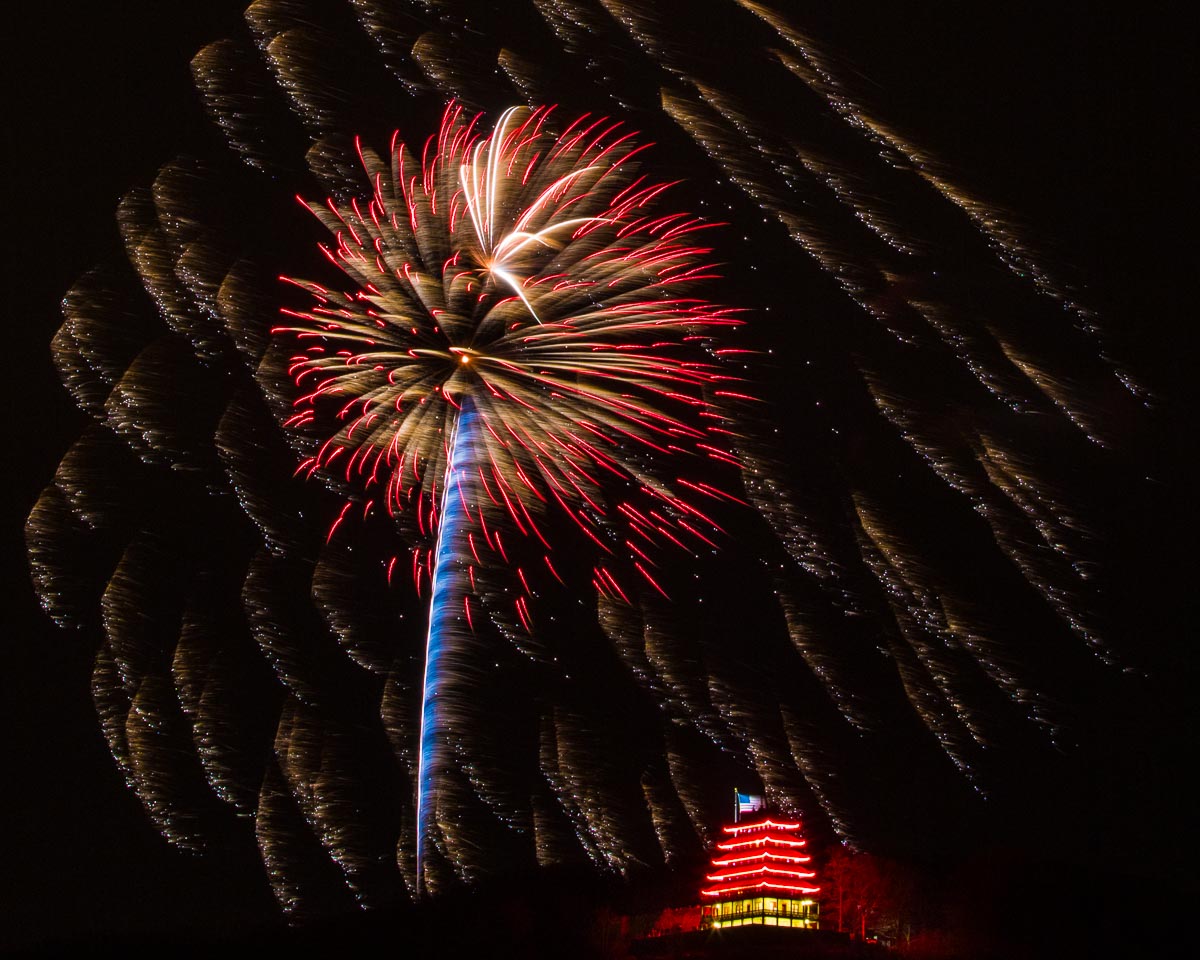
- My shots of the fireworks over the Reading Pagoda called for a longer telephoto lens, as I was shooting from about a mile away
- Make sure your lens is free of dust and smudges.
- Use a lens hood to minimize lens flare from any nearby bright lights
Day of Show-
- Arrive early-in plenty of time to set up or call an audible if something unforeseen in your scouting is taking place
- For the image below, arriving earlier in the day, made me aware of the MOPAR show that was surrounding the stadium. This gave me time to come up with a different location than I had originally planned,
to now include the lighted cars-which added a little extra something to the images!

Use a Tripod
- Using a tripod is the best way to get sharp images
- A sturdy tripod that extends as high as your eye level without using the center column is the best option
- It also allows you to keep the shutter open for longer exposures that would be impossible to hand-hold without motion blur.
- Also recommend using a cable release to trip the shutter. They function better than wireless remotes for fireworks, IMO
Camera Setting Suggestions
- Shoot in RAW file format. Images will need some post-processing, and this will give the best options
- Set your camera completely manually. Meaning-Manual exposure and manual focus. Your camera’s meter cannot meter accurately for fireworks, and it will never be able to obtain sharp focus on moving light streaks that are gone in a second
- ISO set to lowest setting recommended by camera manufacturer-such as 100 or 200
- Start with f/11 as your aperture. Open up to a wider aperture if your bursts are under exposed or close down a stop if over exposed
- Use Bulb Mode. This allows you to keep the shutter open (by holding the button down on your cable release) to capture several bursts in a single frame

Composition-
- Unless you are far away from the fireworks, or have composed a foreground that lends itself to landscape orientation, vertical or portrait orientation works best
- Make sure your camera is level
- Leave plenty of room in the sky to capture bursts shot off at varying angles
- After a few bursts, compose tighter if you find you are leaving way too much room, or wider if cutting off the bursts
- Watch out for power lines, trees etc, that may be blocking your view. They’re hard to see in the dark
Other Tips-
- When you hear the burst go off-get ready to press your cable release and open your shutter. Make sure you let go of the button when you want the shutter to close (assuming you are using Bulb Mode
- Keep the button pressed in to get more than one burst in the image
- Decide how you feel about the “tail” – the white streak that is recorded as the burst goes up in the air. If it seems distracting to you –which IMO it is, then wait until the very last moment before the burst opens to open your shutter. If you like the tail, open the shutter as soon as you here the rocket set off
- The fireworks should be colorful-not washed out. If they all appear white, you are over-exposing
- Have highlight alert turned on so you can see “blinkies” in areas that are pure white.
- If there is a breeze, try to be upwind from the smoke. Smoke ruins images quickly
- Bring a Flashlight so you can find camera settings quickly and see to move around safely in the dark

Extra Credit-
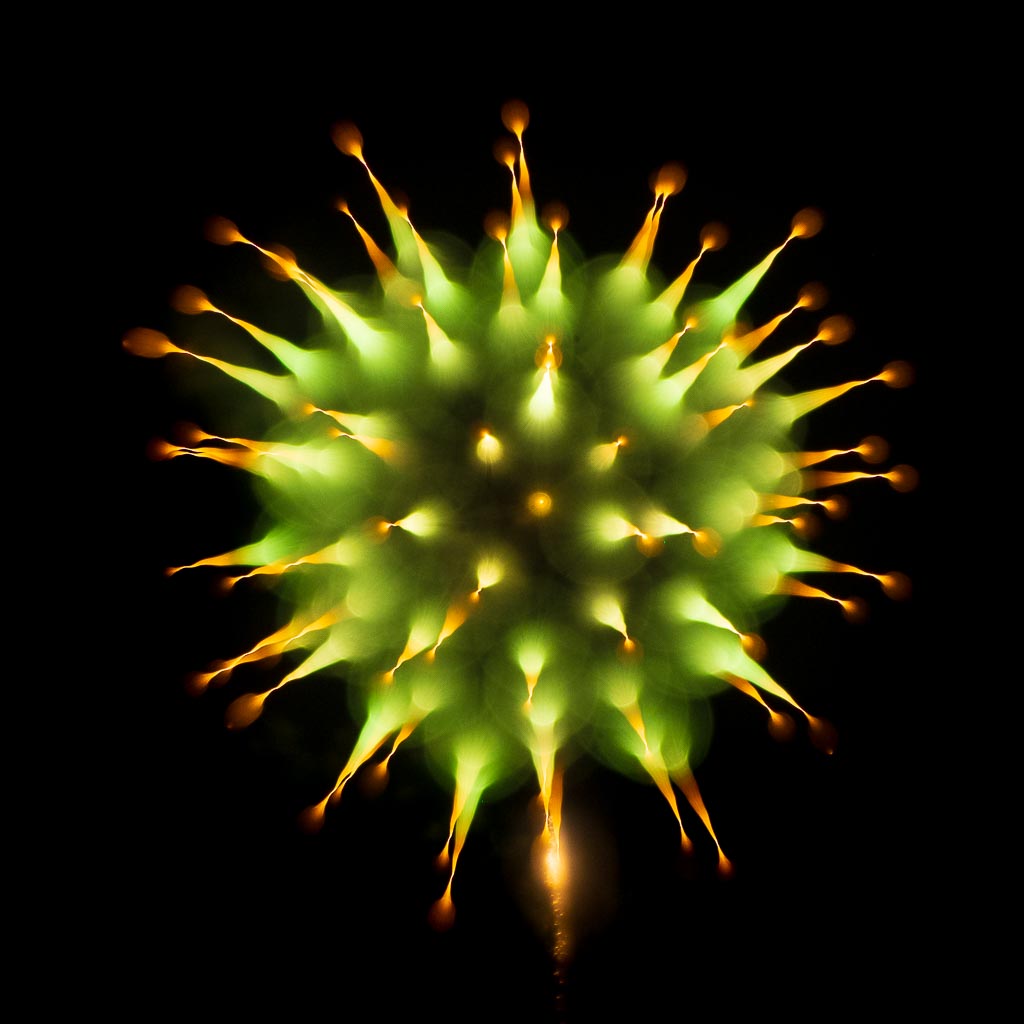
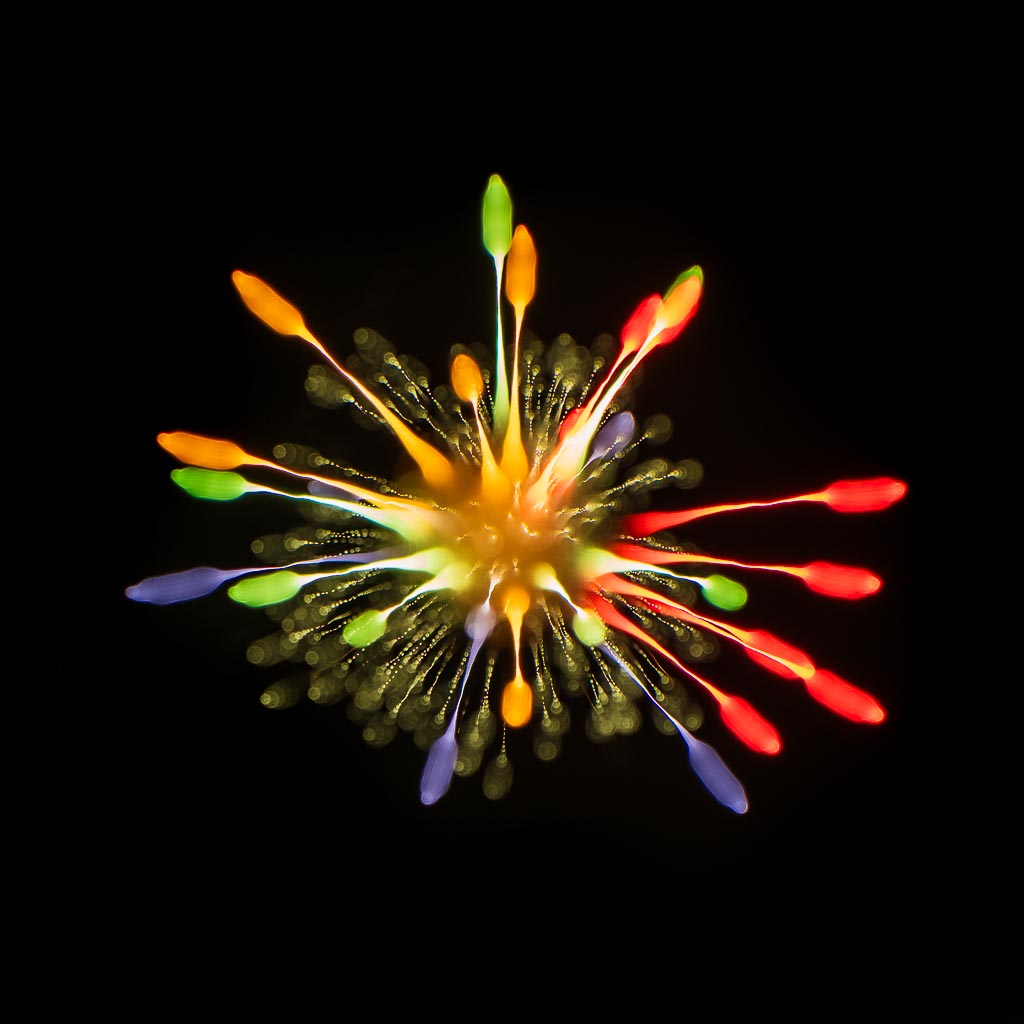
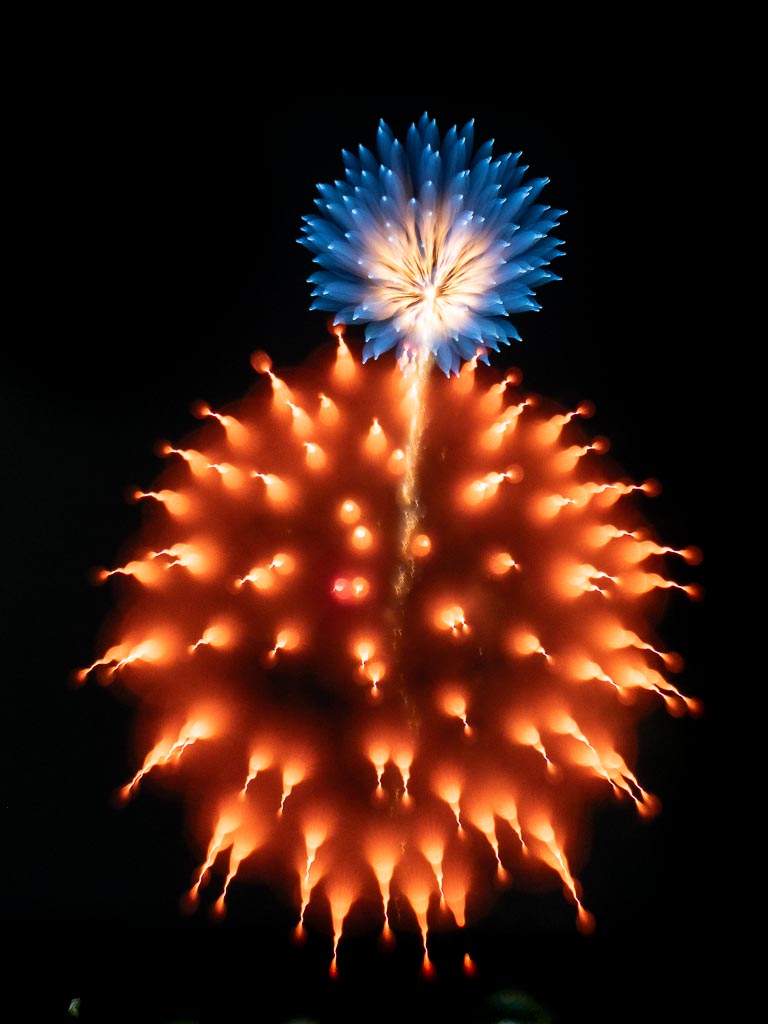
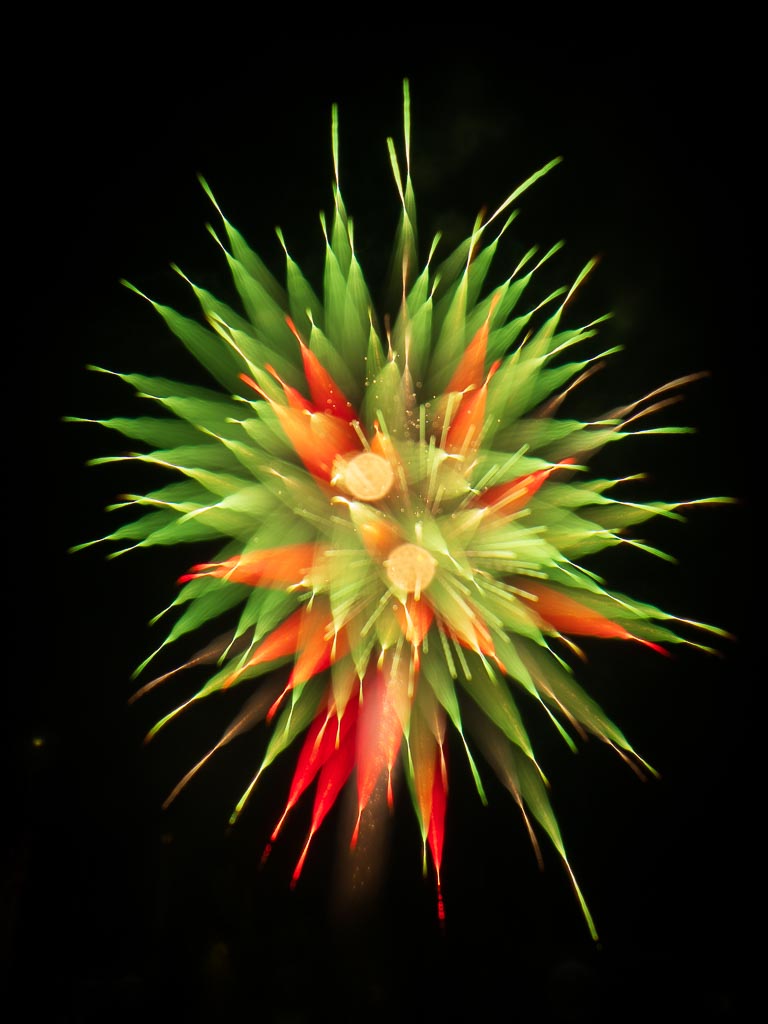
In order to mix it up a little with my images, I try not to shoot the same way over and over again. For the images below, I used what is known as the Focus-Pull technique. You start with your lens turned completely out of focus, and then as the burst is about to open, you quickly turn the lens into sharp focus. Best results come from using a wider aperture. This usually requires using a filter to cut down some light. I often use a circular polarizer, and/or a ND 4 neutral density filter. The goal is to be able to shoot around F/4 or wider. If you don’t have a filter, still try the technique, but the really blobby looking images come from a wider aperture.
It’s crazy challenging and will take a decent amount of practice, and luck. 😄 You’ll most likely have a bunch of images that are a mess. But keep trying! This creates some very unique images-some even look like sea-urchins! What do you think?





And the Most Important Tip…
- Once you get to the finale-stop shooting and enjoy the show!
- Tons of bursts will be going off at once-overlapping one another. It is nearly impossible to get any good shots at that point. You can try, but listen for my voice saying, “Let it go. Or, I told you so” ☺
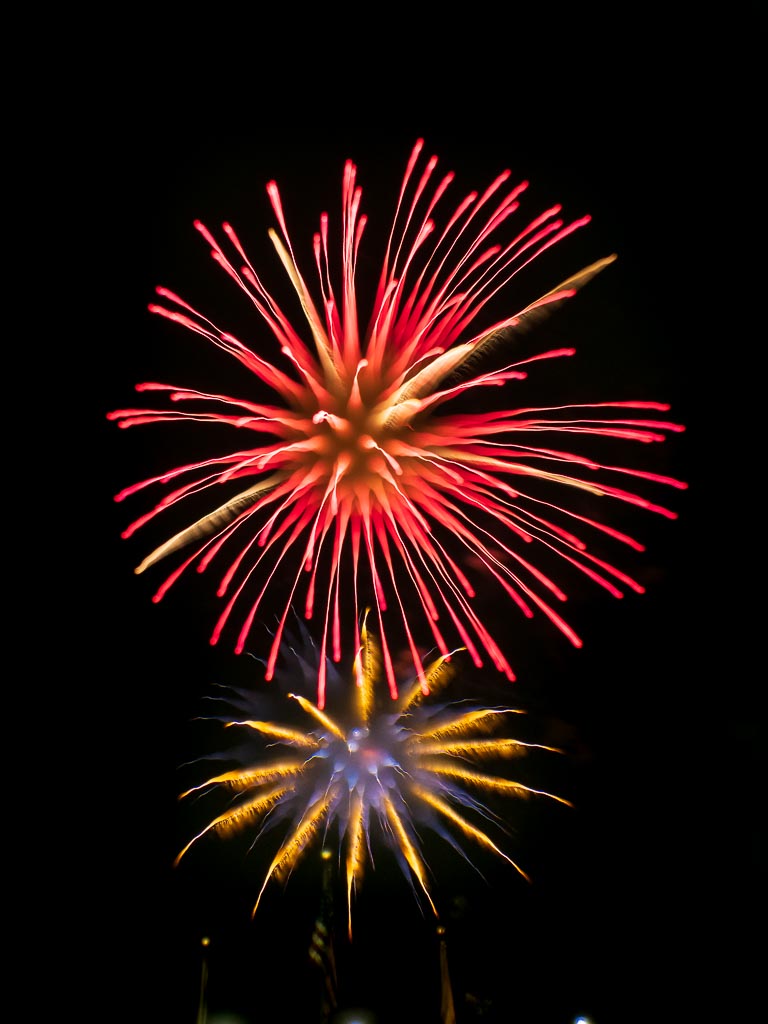
- Below are a few more favs


My Gear…
For those who may be interested, this is the gear I am currently using for my fireworks images. (Note: these are affiliate links, and will help support my endeavors with a small commission.) The lens I use depends on how far away from the fireworks and how much foreground will be included. Any decent tripod that reaches up to your eye level-or close, without having to use the center column is best. It should be sturdy, and the bullhead should lock tight. I actually use a Gitzo that is almost 20 years old. I would not pay for or in good conscience recommend anything that expensive at this point.
Neutral Density Filter to cut down light for the Focus Pull shots. This is a 77mm. Choose the filter size for your own lens
Sirui Heavy duty Carbon Fiber Travel Tripod
Cable Release – When choosing a cable release, make sure you specify in your search, the exact model camera you own.
So, there you have it! A few tips to help you create some stunning images of fireworks displays this summer. I hope you found this info useful. If you don’t already do so, I’d love to stay connected on Instagram: @ValerieHoffmanPhotography and Facebook: search “Valerie A Hoffman Photography”
Thanks for taking the time to check this blog post out!